
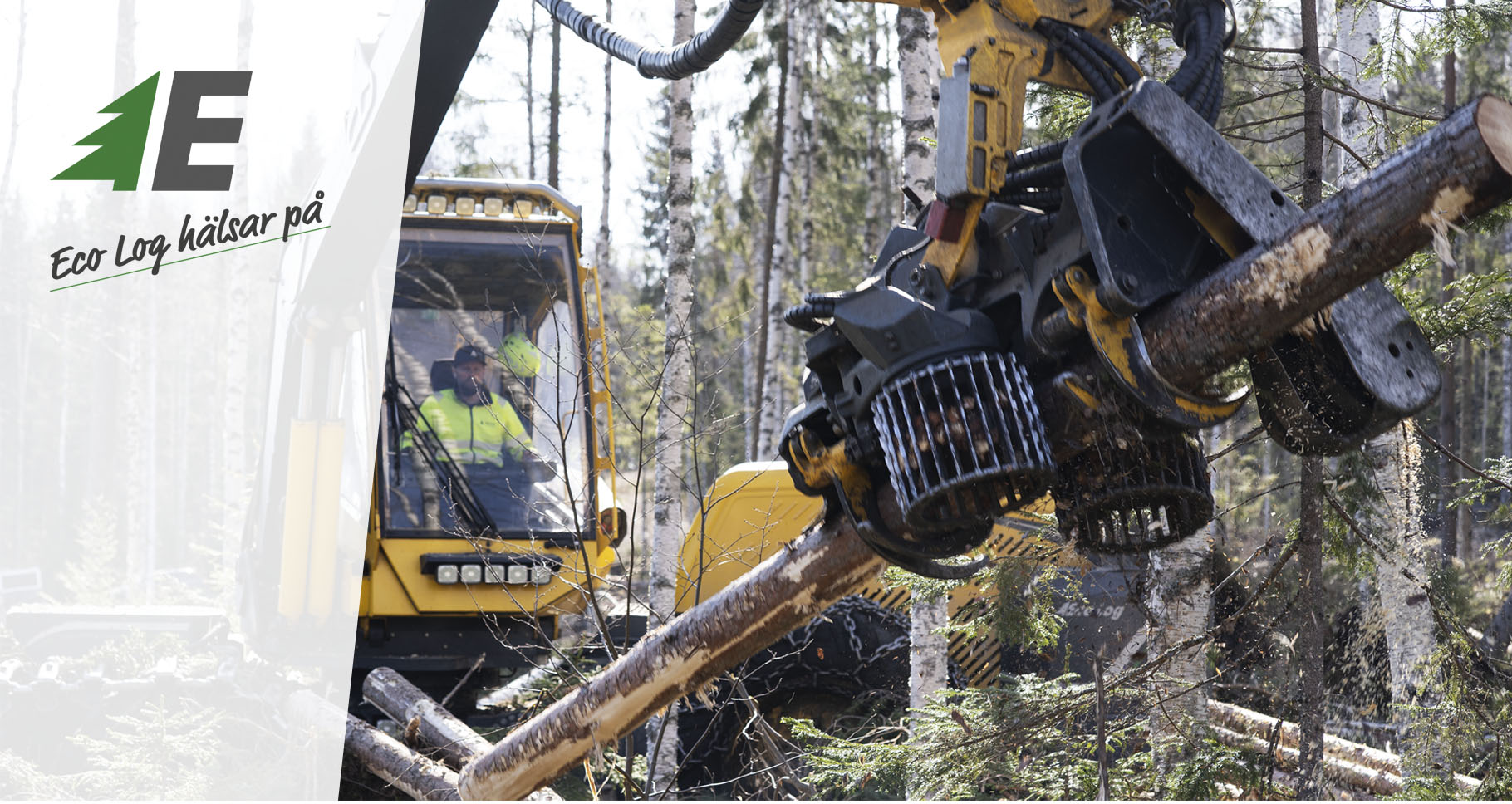
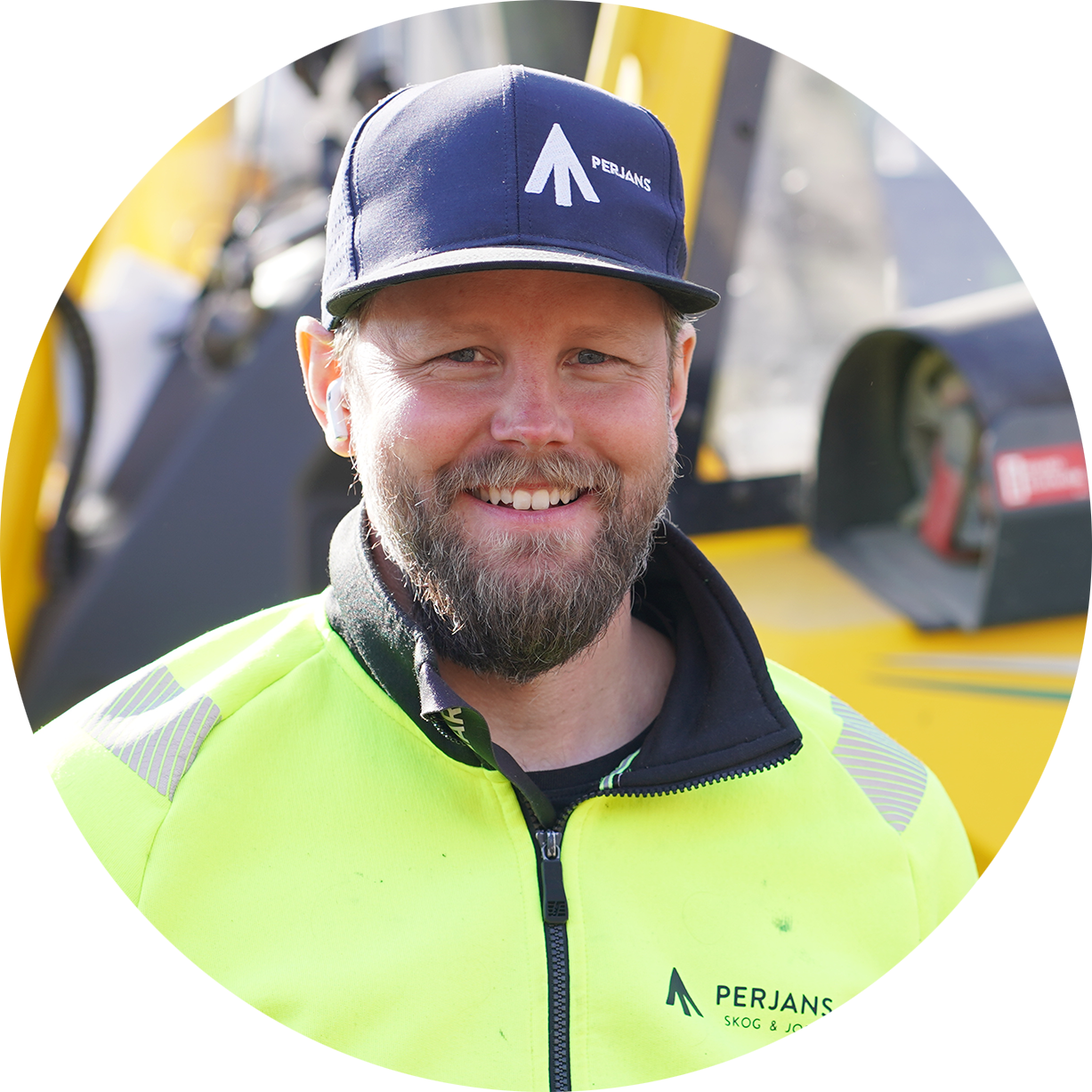
To gain insight into what everyday life looks like after the storm, we visit contractor Emil Perjans of Perjans Skog & Jord, who is working in the heart of the storm-damaged forests of Hälsingland.
As we meet in the forest, the scale of the destruction quickly becomes apparent. Before us stretches a vast area of uprooted and fallen trees.
“This is just a small part of the aftermath of Johannes. Overall, a very large area has been blown down,” says Emil.
Despite the months that have passed since the storm, it is still difficult to comprehend the extent of the damage.
“We knew trees would come down, but no one could have imagined the scale of it,” Emil explains.
He clearly remembers the day the storm arrived. At home in Alfta, he followed the weather developments together with his family.
“We were sitting at the dinner table that evening when the wind really started picking up. We wondered what things would look like when we woke up the next morning. But we had no idea how bad it would actually be,” Emil recalls.
For many forest owners, the consequences have been significant. The loss of forest assets represents not only a financial setback but also a major emotional blow.
“Many landowners are deeply saddened. For some, the forest was part of their retirement plan. They intended to let it continue growing for a few more years before harvesting. When a storm comes along and changes everything overnight, of course it’s difficult to accept,” says Emil.
The cleanup work will continue for a long time to come. For Emil, that means windthrow harvesting dominates his working days.
“This will be our workplace for quite some time. There’s still a lot left to do,” he explains.
At this particular site, however, the crew is assisted by so-called root cutters—manual chainsaw operators who work ahead of the machines, cutting the stems free from the uprooted root plates.
“That makes the work much smoother for those of us following behind with the machines,” he says.
But forestry is only one part of Emil’s daily life. Alongside his contracting business, he also runs a grain farming operation.
“We’re about to enter a busy period there as well. In another week or so, cultivation will be in full swing, so things are pretty hectic right now,” says Emil.
Despite the workload, he appreciates the variety.
“It’s nice to switch things up from time to time. And besides, we’re heading into what I think is the best season of the year.”
Inside the cab, Emil operates his trusted harvester, a machine he has owned since 2022. It is equipped with an EC 561 harvester head, one of the first units of its kind to be delivered from the factory in Söderhamn.
“It has performed very well. The measuring system is stable, it requires very little calibration, and the head is both fast and versatile. It handles both smaller and larger trees with ease, so it suits my needs perfectly,” says Emil.
The harvester head has proven particularly effective in windthrow operations.
“When the forest looks like this, it’s a really good combination,” he says.
As the workday draws to a close, we take the opportunity to get to know Emil a little better with a few quick questions.
The choice between ice hockey and bandy is an easy one. Although Alfta is well known for its strong bandy tradition, hockey holds a special place in his heart.
“Hockey, without a doubt. I played myself until fairly recently, although these days it’s mostly a bit of veterans’ hockey. But bandy is fun to follow as well,” says Emil.
When asked to choose between crayfish and fermented herring (surströmming), his answer is somewhat unexpected.
“I’ll say surströmming. A big reason is the Surströmming Festival here in Alfta. It’s a fantastic event,” Emil explains.
At the same time, he admits that his taste buds might actually favor crayfish over the famous fermented delicacy.
Finally comes the question we ask every forestry contractor we visit: What is the best meal to bring along in the machine?
The answer comes without hesitation.
“Creamed macaroni and sausage. You can’t really go wrong with it, and it won’t burn when you heat it up in your lunchbox, so it always works,” says Emil.
We thank Emil for his time and for giving us a glimpse into the reality following Storm Johannes. The work is far from over, but thanks to contractors like Emil Perjans, the cleanup continues—tree by tree, stand by stand.
A big thank you to Emil Perjans for a pleasant and informative visit!


